
COAST-SCAPES publishes a policy brief on the importance of integrated action to strengthen coastal climate resilience
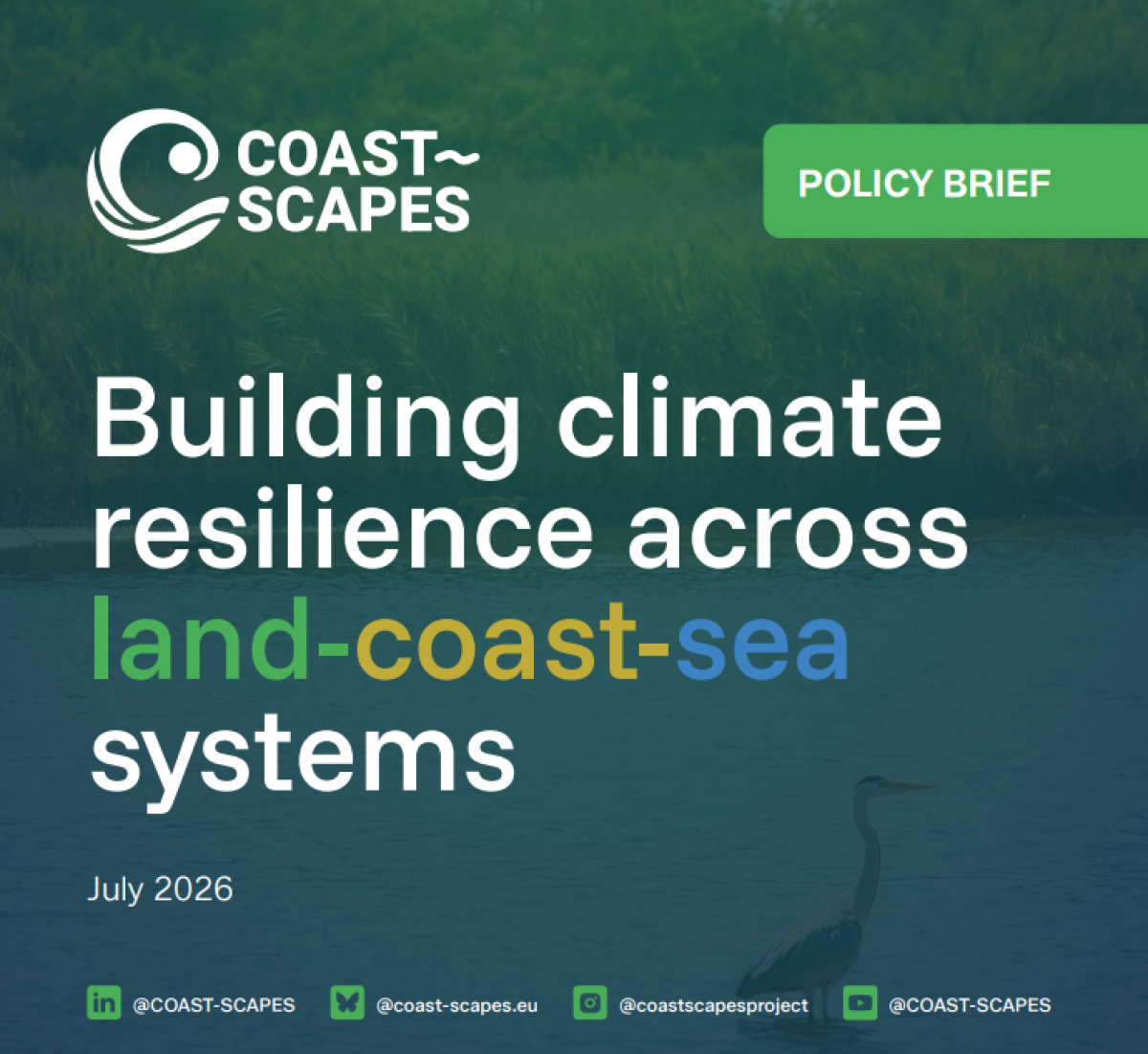
As a result of the collaborative work between CORILA, GeoEcoMar, PENSOFT and members across the project's pilot site areas, the recently published COAST-SCAPES policy brief highlights the need to move beyond fragmented approaches and manage land, coastal and marine environments as interconnected systems.
Coastal regions are increasingly exposed to interconnected climate risks, from sea-level rise and coastal erosion to flooding, biodiversity loss and water scarcity. While Europe has made significant progress in climate adaptation, responses to these challenges are still often planned separately across sectors and administrative boundaries, limiting their long-term effectiveness.
The COAST-SCAPES policy brief, “Building climate resilience across land-coast-sea systems”, draws on evidence and experience from the project to highlight how integrated approaches can support more effective and lasting climate adaptation. Its central message is that land, coastal and marine environments need to be managed as one interconnected system, combining Nature-based Solutions and scientific evidence with integrated governance, stakeholder involvement and sustainable financing.
Building on experience from projects' pilot regions, including Mar Menor, Venice Lagoon and the Wadden Sea–Weser Estuary, the brief translates emerging project knowledge into six policy priorities. These include establishing permanent science-policy interfaces, strengthening integrated land-coast-sea planning, mainstreaming Nature-based Solutions into adaptation policy, improving resilience assessment frameworks, supporting long-term financing and promoting knowledge transfer between regions.
The full policy brief is available here.


